"You can go back and see days that are dead and gone."-Rose to the Doctor-
"Chris Eccleston was tremendous, magnificently dark, and it was a shame he didn't continue longer."
-Elisabeth Sladen from Elisabeth Sladen: The Autobiography [p.304]-

Sladen couldn't be more right regarding her assessment of Eccleston's turn as the Doctor. I've had a similar reaction to Eccleston particularly in specific moments in both Rose and The End of The World. There are indeed reflections in those eyes that suggest a life in some degree of turmoil. You get the feeling his mind is writhe with pain as a result of things he's seen. Eccleston delivers a nuanced, subtle touch in this way to the Doctor. After watching all of Series 1, and still fully aware how amazing David Tennant was in this role, there was indeed something "magnificently dark" about the approach by Eccleston. He brought something unpredictable and haunted to the role in his own right as a Time Lord pained by the loss of his kind. Series 1 really is a fast, assured, definitively potent turn by the actor in just thirteen short episodes.
The latest entry, Doctor Who, Series 1, Episode 3, The Unquiet Dead, brings a good degree of darkness and the haunted all its own. The whole exercise stands out by taking Doctor Who back in time for the first time in this new series. Together, the first three entries of Series 1 combine to deliver a stark contrast in style and approach by presenting stories in the past, present and future. Russell T. Davies and company present a bold imperative that this is a splendid sign of things to come.

Every great series is entitled to a misstep or two. Every episode can't be as good as Doctor Who, Series 1, Episode 2, The End Of The World, the kind of episode that seems to have endless re-watch potential.

Doctor Who, Series 1, Episode 3, The Unquiet Dead surprised me. It certainly isn't lacking in production value or the exquisite period look of the day it inhabits. The team behind Doctor Who can create a set aesthetic better than most - just spectacular! Director Euros Lyn [The End Of The World] leaves the future and returns with his remarkable hand for a much more muted adventure tale set in Cardiff in 1869. Honestly, my initial viewing of The Unquiet Dead was less enthusiastic than my response to the vivid The End Of The World. A second viewing allowed me to appreciate the subtleties in the performances and, once again, the truly marvelous performances. The Unquiet Dead was nearly dismissed upon my first look. I would have been mistaken. It happens.

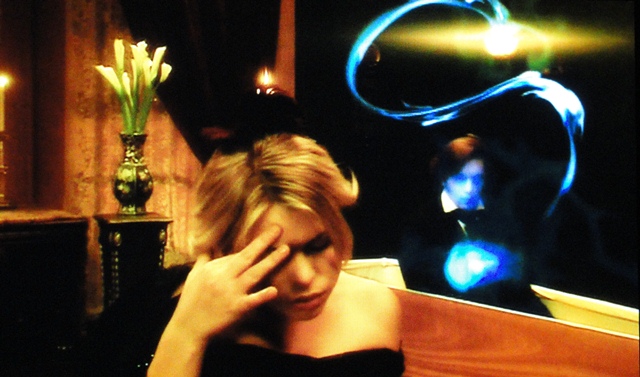
The TARDIS lands and Rose is ready to bound off into Victorian era Cardiff, Wales. The Doctor advises Rose to go native in her attire rather than start a riot among the inhabitants of the day dressed as "Barbarella" [in other words, yeah, she's hot!]. Have I mentioned how positively beautiful Billie Piper is? Of all of the Doctor's companions, and I crushed heavily on Elisabeth Sladen and Louise Jameson, Piper is one to be entirely smitten with as she embodies sex kitten territory. She's certainly not presented that way, but it's easy to see why she would land the lead in Secret Diary Of A Call Girl. She is modern day sexy and cute all in one! She is positively gorgeous with her voluptuous lips, big beautiful eyes accented by heavy mascara and radiant blond hair. Deee-gorgeous! And I thought Louise Jameson was the primitive sex kitten of her day.
Needless to say, the Doctor clearly has a wardrobe room on board the TARDIS to suit the periods accordingly and he gives a real sense of scope and depth regarding that little Police Public Call Box. "First left, second right, third on the left, go straight ahead, under the stairs, passed the bins, fifth door on your left." Wow!


Per the usual Davies' stamp of approval, the story is filled with a wonderful cast of characters including none other than Eve Myles as Gwyneth in this early era Doctor Who entry pre-dating the character role she would popularize for Torchwood. Ironically, she would one day play the part of Gwen Cooper [a different Gwen] joining forces with Captain Jack Harkness for Torchwood whom she pre-dates here in the Doctor Who series as guest appearances go. Myles is magnificent in the part here - a true delight.
Funeral parlour [built on a time rift] director Gabriel Sneed and his assistant Gwyneth, who has been in Sneed's care since she was a child, must track down a deceased woman, Mrs. Peace, now undead and on the loose. They must do some "body snatching" and Sneed requires Gwyneth's gift of second sight or clairvoyance to find her. The undead is en route to see Charles Dickens at a local theatre. Simon Callow is also excellent in the role of Dickens. Callow would also return for Doctor Who, Series 6, Episode 13, The Wedding Of River Song and even lend his voice to an episode of The Sarah Jane Adventures [Series 3, The Gift].


The Doctor and Rose attend a performance of Scrooge by Dickens. The old woman is the host to blue gases which rise and exit from the old dead woman before she crumbles in a heap. Gabriel and Gwyneth abduct Rose fearing she has seen too much.
The Doctor jumps a ride with Dickens to pursue Rose in a most humorous sequence as the Doctor realizes he is riding in the buggy with none other than writer Charles Dickens. It's a scream as he explains what a big fanatic he is of the man's work. "I'm your number one fan!" You see - I'm not the only fanatic out there.
"What in Shakespeare is going on?" The Doctor and Dickens arrive at the funeral parlour. Rose is under attack by the re-animated old woman and her now deceased grandson, Mr. Redpath. How absolutely adorable is Piper in this moment when she is overcome by the moment of meeting Charles Dickens while at once evading the zombie dead?
Gabriel explains to all that there is something about the house and that the "stiffs" actually come to life. The Doctor explains that the rift is growing and the vapour-like lifeforms are gaining in strength. The Doctor makes every effort to convince the disbelieving Dickens of these otherworldly creatures.


Meanwhile, there's a lovely character scene between Rose and Gwyneth. Despite being over a century apart culturally they discuss that which they have in common between them. Couldn't we all use a little more understanding? The scene is very good but too long to capture in one clip. I have included a small segment of it whereby Gwyneth expresses to Rose how she can see this amazing place Rose inhabits in the future. She even makes mention of the "Big Bad Wolf." It's a nice taster of things to come from the talented Eve Myles. Based on her character here one might find it hard to believe she would become something of a sex symbol for fans of Torchwood like myself.
The Doctor recognizes that Gwyneth grew up on the time rift and she is the key to it. The time rift is referenced in Fourth Doctor classic, Season 15, Episode 94, Image Of The Fendahl. The rift is also further explored in Series 1, Episode 11, Boom Town and Series 3, Episode 11, Utopia as well as the Torchwood series.


A seance is in order to speak with the ghosts. The mood for the scene and the episode in general featuring ghosts and Dickens and period costumes is all perfectly appropriate to capture the era. It's a splendid bit of Doctor Who time travel, while maybe not as brilliant and original in ambition as The End Of The World, The Unquiet Dead still delivers a good romp as Davies intended.
Gwyneth makes contact with the spirits, The Gelth, the last of their kind, killed off in the Time War. This is the first official mention of the Time War, which would receive greater explanation in Doctor Who, Series 1, Episode 6, Dalek. The ghosts speak through Gwyneth. Their gaseous states utilize the dead as vessels to take physical forms. They are dying and they seek to live. They wish for the rift to open.


The Doctor believes Gwyneth should let the beings through. Having them inhabit "cadavers" is like "recycling," the Doctor believes. Rose finds it all a bit morbid and morally objectionable. It's certainly a natural human reaction. Rose is protective of Gwyneth. "The angels need me," believes Gwyn. The Gelth have been singing to her since she was a child.


Gwyneth unlocks the rift and releases the Gelth, but the creatures surprise everyone and reveal themselves to be essentially demonic. The beings begin killing the living to make more vessels for their dead. "I think it's gone a little bit wrong," admits the Doctor quietly. No one said the Doctor was always right. "I trusted you. I pitied you!," declares the Doctor, yet the Gelth have other plans. And what about time travel?
The electricity between Rose and the Doctor continues to manifest itself.

There's a real sense of affection and love between these two beings. No one can overstate or dispute the chemistry between Billie Piper and David Tennant during Series 2, but it's clear that Piper and Eccleston definitely shared a rhythm and were well cast to establish a relationship never before quite explored in Doctor Who. They too shared the magic.


Ultimately Dickens saves the day. The Doctor tells Gwyneth to send them back because they are not angels but rather devils. Gwyneth, the unlocking key, holds them in the morgue while everyone escapes. The Doctor realizes Gwyneth will sacrifice herself for the others because, in a touching moment, he discovers she is already dead. She passed the moment she offered her help to the Gelth. It's quite an affecting moment well-played by Myles. The servant girl saves the world. As Dickens says, quoting Shakespeare, "There are more things in heaven and Earth than are dreamt of in your philosophy." This speaks to the humor of the character Charles Dickens as portrayed here as he begs the question, "What the Shakespeare?," a play on the old adage, "What the Dickens!?" According to the events of Doctor Who history, Dickens would be inspired by the events surrounding the Doctor and the Gelth to return to London and write a new story. Dickens intends to write The Mystery Of Edwin Drood [1870] as The Mystery Of Edwin Drood And The Blue Elementals. The fictional story would never see the light of day. For Charles Dickens would die in 1870, a year later leaving the work unfinished and without an ending. Nevertheless, The Mystery Of Edwin Drood did become an unfinished reality. As the Doctor and Rose fades away in the TARDIS, "old Charlie boy" laughs and proclaims, "God bless us, everyone" alluding to the chilling Christmas classic, A Christmas Carol [1843]. The snow falling at the end of this chilling story is perfectly apropos. One of the wonderful aspects of The Unquiet Dead is the ability for it to tap into the period and the vibe of Dickens. It works. Writer Mark Gatiss intended something even more intense for the story but Davies wanted it softened a bit. It still works.

I had a greater appreciation for the episode upon a second viewing, but it still doesn't rise to the level of The End Of The World. Mind you, it's a bit like an apple and an orange as these first three installments of Series 1 have quite different atmospheres and play within very different genres within the Doctor Who world. Lyn handles these second and third entries both winningly. In fact, the Doctor and Rose meeting and teaming with Charles Dickens is always one of those classic time travel adventure ideas. The whole concept screams Doctor Who. Furthermore, the Doctor and Rose are perfectly suited to bring a sense of humor and history to life a la Bill And Ted's Excellent Adventure [1989]. It works as a wonderful science fiction story while getting the young talking about the literary past. That's never a bad thing. The fictionalized Dickens character in the story asks if his books would last, whereby the Doctor assures "forever." Well, as time has proven, in the age of television, there's a forever quality about Doctor Who too, given its own impressive historic run, and with solid writing like this the series too will forever remain. The Unquiet Dead: B+. Writer: Mark Gatiss. Director: Euros Lyn.
Monsters/Aliens: The Gelth.


Director Footnote: Euros Lyn [1971-present]. Wonderful director Euros Lyn notches his second entry in Series 1 behind the fantastic The End Of The World. Lyn would become a force in the world of Doctor Who directing more than ten entries including: The End Of The World [Series 1], The Unquiet Dead [Series 1], Tooth And Claw [Series 2], The Girl In The Fireplace [Series 2], The Idiot's Lantern [Series 2], Fear Her [Series 2], The Runaway Bride [2006] [Christmas Special], Silence In The Library [Series 4], Forest Of The Dead [Series 4], The End Of Time [2009-2010] [Christmas Special]. Lyn would also try his hand at Torchwood for the critically acclaimed Children Of Earth [2009]. He won the BAFTA Cymru Best Director Award for Silence In The Library [2008]. He also won the Hugo Award for Best Dramatic Presentation, Short Form for The Girl In The Fireplace [2006]. These are no easy feats, but based on just two entries here from Series 1 it was clear the man had vision.
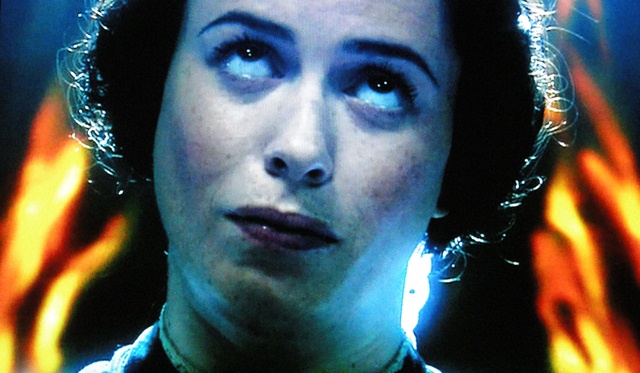
The Unquiet Dead notches in at #54, a surprising forty places higher than The End Of The World at #94 and nearly ten slots higher than Rose at #63 in Doctor Who Magazine The Mighty 200! Do you agree?


