Friday, May 10, 2019

Shane Rimmer (1929-2019)

It's another FAB FRIDAY belated tribute to memorialize the loss of dear Shane Rimmer (1929-2019) here at Musings Of A Sci-Fi Fanatic. Still, it's never too late to pay respects and so we say goodbye to the unforgettable voice of leadership that was Scott Tracy of the internationally renowned Tracy family.


The Toronto born Rimmer was absolutely phenomenal for all things Gerry and Sylvia Anderson. And that's the truth as you'll see here.

As Scott Tracy Rimmer was the leading voice of International Rescue, apart from his father Jeff Tracy, on Thunderbirds (1965-1966) for both Series One and Series Two and a grand total of 32 spectacular episodes.


Still, Rimmer had an impressive career of small roles in endless films and TV. Some favorites include Dr. Strangelove (1964), Edgar Rice Burroughs' The People That Time Forgot (1977), Warlords Of Atlantis (1978), The Spy Who Loved Me (1977), Gandhi (1982), Out Of Africa (1985) and Batman Begins (2005).

Little known is his work in You Only Live Twice (1967) and Diamonds Are Forever (1971) opposite Sean Connery. He did some dub work on Roger Moore's Live And Let Die (1973) before his big role opposite Moore in The Spy Who Loved Me. He first appeared opposite Moore in TV series The Saint (1964) for the episode The Hijackers. He returned to work with Moore again in Moore's TV series The Persuaders! (1971-1972) and thought highly of the 007 actor.

Films he appeared in uncredited included Star Wars (1977) and Superman II (1980).

He even guested in Doctor Who's The Gunfighters (1966), home of England's greatest science fiction series and the longest running in sci-fi history. England would be where the Toronto-born Canadian made his home.


And about his contributions to the world of Gerry and Sylvia Anderson. Rimmer was positively everywhere in leaving his mark. Apart from Thunderbirds, he also employed his talents on voice work for a number of Anderson productions including Captain Scarlet And The Mysterons (1967-1968), Joe 90 (1968-1969), The Secret Service (1969) and Space:1999 (1975-1977).

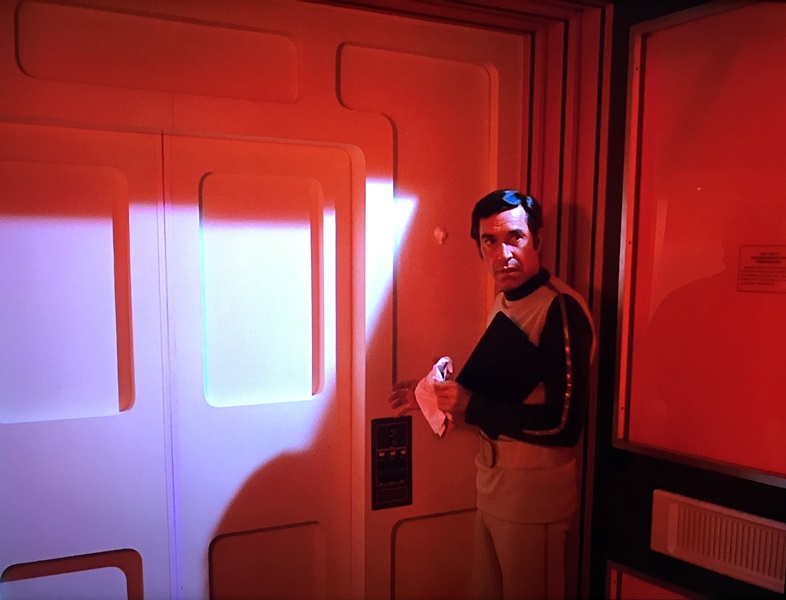
He even appeared in Space:1999 episode Space Brain (Y1, E20), the pre-Space:1999 space series from which the latter evolved UFO (1970) and The Protectors (1972-1974). Rimmer even penned two of the scripts for The Protectors in Zeke's Blues and Blockbuster (the final episode of the series).

He also performed in the unaired pilot for what would be come Space Precinct (1994-1995) but was replaced in one of the lead roles.


He released an autobiography titled From Thunderbirds To Pterodactyls (2000).
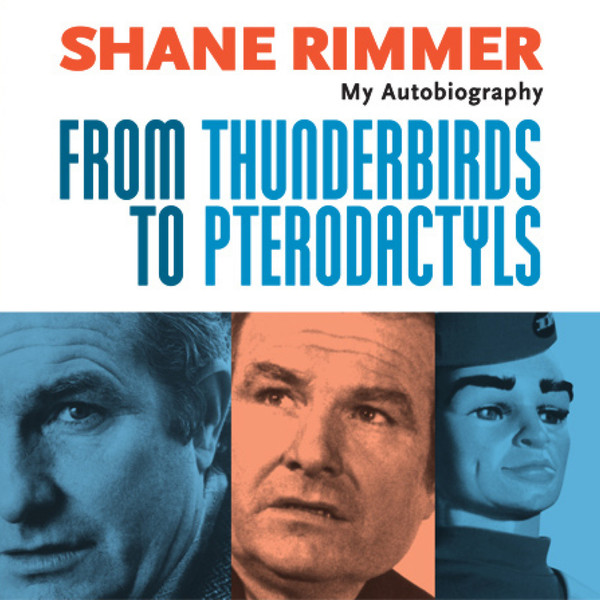


Rimmer was a prolific performer and unabashed in performing work no matter how big or small, in front or behind the camera. Rimmer's contributions to many glorious years of childhood viewing especially on Thunderbirds will never be forgotten.


His voice was warm and impassioned and there was never anything wooden about his infusion of work into that marionette series.

Rimmer was 89 and he was indeed F-A-B!


Johnny Byrne: On Space:1999

"Episodes ... finished so multi-faceted---simple on the surface, very complicated within. So far as I know, I was on nothing more stimulating than the stodgy food served at the studio restaurant."

-Johnny Byrne, Destination: Moonbase Alpha The Unofficial And Unauthorized Guide To Space:1999 (p.90)-


Writer Johnny Byrne would handle the scripting chores on eight of the twenty-four episodes for Space:1999 Year One.


The man behind End Of Eternity and Force Of Life continues to probe the complex questions of humanity underneath the surface while still delivering the chilling thrills. The Troubled Spirit, Mission Of The Darians and The Testament Of Arkadia remain for Year One. He would return with three stories for Year Two. Have a FAB FRIDAY!

Wednesday, May 8, 2019

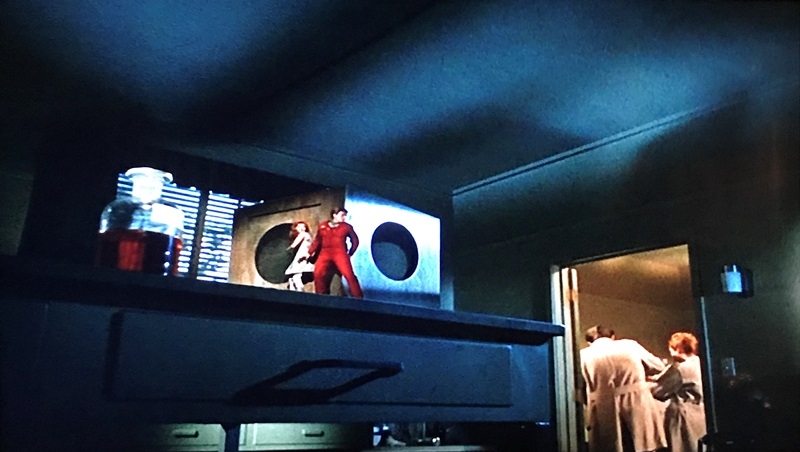
Land Of The Giants S1 E1: The Crash

"It was a modern day version of Gulliver's Travels."
-Gary Conway, Starlog Magazine #151, p.16-


Irwin Allen for a time went BIG and bold and did so through television with four consecutive, remarkable science fiction series. First, Voyage To The Bottom Of The Sea (1964-1968; four seasons; 110 episodes), followed by Lost In Space (1965-1968; three seasons; 83 episodes. These two gems were followed by lesser known successors in Land Of The Giants (1968-1970; two seasons; 51 episodes) and The Time Tunnel (1966-1967; 30 episodes).

Currently enjoying a deep dive of all things Irwin Allen this writer thought it might be nice to deliver you a look at one of his series outside of Lost In Space in the form of Land Of The Giants (available on DVD only).


Still, looking back at Allen's always ambitious efforts, we find with Land Of The Giants, Season One, Episode One, The Crash, there was nothing short of spectacular television to behold once again.

It is truly impressive just how strong his launch episode of The Crash holds up even today as a television experience.


The Crash was written by Irwin Allen and Tony Wilson (who also worked on Lost In Space), and directed and created by Allen. Land Of The Giants is a massive, epic undertaking that stands tall in the pantheon of science fiction television as one might or should expect from that mammoth series title. It's underappreciated by comparison to his other series but there are reasons for that as the series progresses. Still, as a visual exercise The Crash is stunning work.

Allen always launched his series in impressive style and created pilot entries that still genuinely stand the test of time in terms of quality.


Allen directed Eleven Days To Zero in black and white, the series opener for his Voyage To The Bottom Of The Sea with some rousing action sequences following his full color film of the same name from 1961 (here).

Allen got behind the camera for series opener Rendezvous With Yesterday for his The Time Tunnel series.


And of course no one can forget the cinematic feat of his pilot for Lost In Space, No Place To Hide (here).

What Allen achieves on teleprint here for The Crash and Land Of The Giants is indeed impressive.


Hinted at in Lost In Space entry The Oasis (S1, E9) and even There Were Giants In The Earth (S1, E4) with the Cyclops, Allen had BIG ideas and a land of giants is where he was taking them. Land Of The Giants is ultimately the materialization of those ambitions and germination of those initial seeds (S1 E14 Attack Of The Monster Plants).

Well cast the opening episode, The Crash, is indeed a thrill ride in the tradition of the master of disaster's action approach. Low on characterization and BIG on thrills he inserts viewers quickly into an alternative universe of sorts as the crew of a space flight vessel, the curvy, sub-orbital Spindrift (a ship that curvaceously reminds us of the FS-1 Flying Sub from Voyage To The Bottom Of The Sea but in red), enter a kind of space storm warp and crash land, not on Earth, but another unknown planet of giant humanoids.


The year is 1983 and the downed Spindrift crew utilize the ship as a kind of home base like the Jupiter 2 was established as such for The Robinsons in Lost In Space. The futuristic Spindrift is an odd, seemingly alien-like design in and of itself, but still interesting.

Allen wastes no time to establish an adult/child relationship much in the vein of Will Robinson and Dr. Zachary Smith in the form of Barry Lockridge (Stefan Arngrim; brother of Alison Arngrim a.k.a. Nellie Olsen of Little House On The Prairie) and Alexander Fitzhugh (Kurt Kasznar). It's undeniable that Allen was looking to tap into some of that Lost In Space magic here. Though clearly its not entirely electric in that way. Bill Mumy was a tough act to follow along with Jonathan Harris, and the latter were just that good. The cast is infinitely likable enough to start here but Kasznar and Arngrim would have some work to do.


Gary Conway (I Was A Teenage Frankenstein) plays the hunky Captain Steve Burton along with co-pilot Dan Erickson, played by Don Marshall. The familiar Marshal appeared in Star Trek: The Original Series entry The Galileo Seven (S1, E16). He also guested on The Bionic Woman (The Vega Influence S2 E9), The Incredible Hulk (The Hulk Breaks Las Vegas S1 E8, Mystery Man S2 E15/16, Deathmask S3 E20), Buck Rogers In The 25th Century (Planet Of The Slave Girls S1 E3/4) and Little House On The Prairie (Death Sage S8 E4).

War veteran and purple heart recipient Don Matheson who had featured in Lost In Space episodes The Sky Is Falling (S1, E10) and Revolt Of The Androids as well as some Voyage To The Bottom Of The Sea (The Deadly Amphibians S4 E13) plays Mark Wilson.


Two gorgeous women round out the wayward family in Deanna Lund (Batman; actually married to Don Matheson in the 1970s) as Valerie Scott and Heather Young (Batman, Galactica 1980 The Night The Cylons Landed E7/8, The Time Tunnel Town Of Terror S1 E30) as Betty Hamilton. And these two are indeed the male eye candy for the series.

Stefan Arngrim has appeared in a host of genre television shows including The X-Files, Fringe, Caprica, V and Millennium. He also starred in the films Fear No Evil (1981) and The Class Of 1984 (1982). Doctor Zachary Smith's Land Of The Giants' counterpart Fitzhugh would be played by Kurt Kasznar who came with an impressive stage and film degree.


The theme is composed by none other than John Williams (Lost In Space, The Time Tunnel, Star Wars) and builds upon the epic-sized potential of the series.

Like the unaired pilot for Lost In Space, No Place To Hide, The Crash does an exemplary job of launching the series and establishing the setting of a group of survivors living in a world of shadowy, creepily silent giants (in this first entry) surrounded by giant everything. Kids, scientists, cars, spiders, cats, dogs, safety pins, books, cages, thread, jars, egg cartons, light bulbs, curbs and the list goes on. What a production feat! There is no shortage of impressively cool props and film tricks to juxtapose and contrast the tiny cast against a land of giants. The Crash gets a huge, BIG fat thumbs up from The Sci-Fi Fanatic.


So while thrilling, the question is would the series develop beyond a series of epic sized action set pieces and would we get to know these pint-sized characters? Or would they be but mere two dimensional action figures, like the toys of our own childhood, brought to life in a land of giants to run from one place to the next? To start though I won't hold character deficiencies against the launch of this giant-sized series with its grand visual aspirations more than compensating as grand adventures go.

The Crash: A
Writer: Anthony Wilson/ Irwin Allen.
Director: Irwin Allen.

Monday, May 6, 2019

Peter Mayhew (1944-2019)

Peter Mayhew (1944-2019) brought Chewbacca to life in George Lucas' Star Wars (1977). As a kid he was one of the best things about the original trilogy (The Empire Strikes Back and Return Of The Jedi) and of course there were many to love about them.


The actor put so much life into that hairy wookie and said so much with a simple growl. He was the epitome of cool and goofy and fun and the antithesis of digitally rendered characters like Jar Jar Binks that would come later. No matter how many times they tell me Jar Jar Binks is wonderful or that George Lucas tells us its his favorite character, well, all I can say is, something is wrong.


Chewbacca, as portrayed by Peter Mayhew, was the embodiment of all of our child like innocence and wonder in those original three films. He was our imagination covered in fur walking through worlds of spectacle with a cool weapon to boot.


I recall role playing Star Wars in backyard events and I always picked Chewbacca (there I am with my Chewbacca shirt, my brother and my dog, Tink the blink) and gave it my heartiest growl among the neighborhood friends. I even hand built a cheesy wood made cross bow. Good times!


The English actor even played the Minoton in another favorite childhood film Sinbad And The Eye Of The Tiger (1977). I saw both of these 1977 films in cinemas. He portrayed Chewbacca in the prequel Revenge Of The Sith (2005), before later sharing the role and consulting for the new Disney era films. He even made a fun appearance on Kevin Smith's Comic Book Men.


It's always sad to see one of our beloved childhood character actors leave us. It's like a piece of us dying. And we're getting older too. All I can say is well done Peter. The character won't be quite the same without you.

I hope wherever you are your personality inspires others upstairs to say "laugh it up fuzzball."

Friday, May 3, 2019

Space:1999 Y1 E16: End Of Eternity

"How can you value life if you do not fear death?"
-Balor-
"A killer who can't be killed."
-Koenig-
"We must learn to leave some things alone."
-Dr. Helena Russell-

FAB FRIDAY baby! All things fabulous by Sylvia and Gerry Anderson live on.


They say a picture is worth a thousand words. Space:1999, Year One, Episode 16, End Of Eternity opens with precisely that concept. Horrifying images of terror are presented in paintings entombed with a bloodied man inside a wayward asteroid. These images present Commander John Koenig and the Alphans with their latest, troubling deep space mystery.

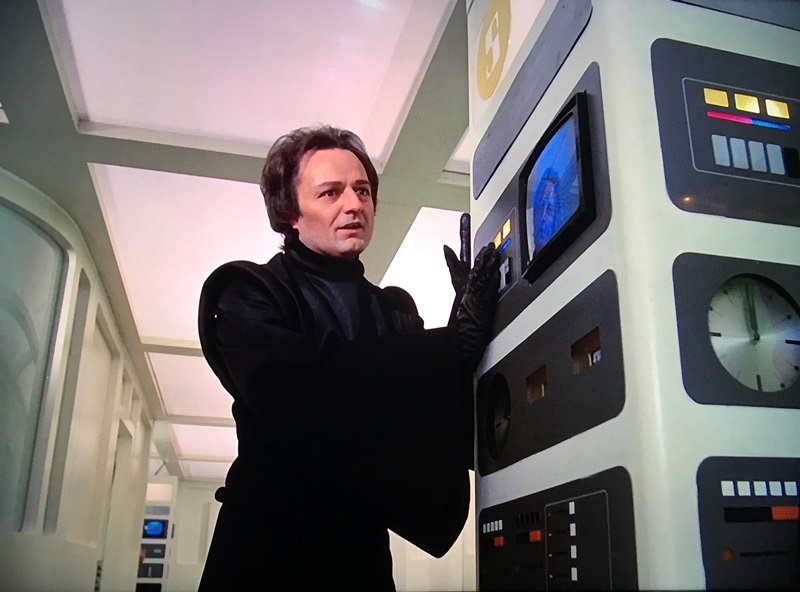
End Of Eternity offered viewers in the 1970s some of the most startlingly violent and surprisingly frightening images of death and body horror seen on television for its time. A critically injured being named Balor, played by mesmerizingly by Peter Bowles, is bloodied and wrapped in bandages. He's carted into Moonbase Alpha from a rescuing Eagle and we are immediately on edge from these opening moments. The images are disturbing and Space:1999 never shies away from the trauma surrounding the Alphans' reality. The combination of mystery, evil and moments of violence make End Of Eternity a stirring entry in the Space:1999 catalogue.


One of the ongoing themes of Space:1999 is encapsulated in the words of Dr. Helena Russell. Russell warns, "we must learn to leave some things alone." As a result of our curiosity, humanity unlocks a horror from the unknowns of deep space. It was this reluctant but necessary curiosity from the hurtling survivors of Moonbase Alpha and the need for discovery that went hand in hand with the Alphans unfortunate position of being ill-equipped and ill-prepared for the mysteries of space. This was not their original mission, but this is their new, unending challenge.

Space:1999 had a uniquely unsettling take on the dark, vast void of space in mood and tone, not previously explored in quite the same way by the family-grounded Lost In Space (1965-1968) particularly as that series advanced. The same held true for the approach established by the Starfleet burdens of Star Trek (1966-1969). All of these aforementioned series had their moments and certainly their moments of horror, suspense and mystery. But Space:1999 was tonally unique on the whole as a science fiction. It's atmosphere was consistent and persistently disconcerting and eerie with Year One offering a wonderful selection of quality science fiction stories.


As the script here clearly denoted we wouldn't always like what we would find. Think about the jackal in the box that would be LV-426, speaking of moons, in Alien (1979) just a few years later. In space no one can hear you scream. This sense of silence in the vacuum of space is captured beautifully on camera in End Of Eternity through the limited use of sound during some frighteningly violent confrontations with evil. Ridley Scott would apply the same use of sound and silence to equally great effect for that classic film. In Alien, mankind unlocks a horror from which nightmares are made. The suggestion of those nightmares and unleashing things we simply cannot understand is a theme in evidence here in Space:1999.

Interesting also is how the episode foreshadows a similar idea of unlocking and unleashing evil cast into space that would be handled just as exquisitely for Superman II (1980). In addition, the black garb of the Balor character, a traditional representation of menace and evil, would also be visually duplicated for the aforementioned Richard Donner/ Richard Lester sequel film as portrayed in the escaped villains of General Zod, Ursa and Non.


Directed with moments of real action and some terrifically unsettling low camera angles by Ray Austin the episode, written by the thoughtful Johnny Byrne, is genuinely brought to life making a vivid, lasting impression. There is a terrifying intimacy and urgency to the physical exchanges between characters throughout its streamlined narrative culminating in a gripping showdown between Koenig and Balor for the survival of Alpha.

The story and visuals are instantly memorable as represented by the evil figure of Balor in black against the sterile, white, splendid production design world of Keith Wilson.


As a kid in the 1970s, Space:1999 left a dramatic impression and End Of Eternity is a great example of why it left such a profound mark.

The use of unsettling music and even better sometimes the use of silence or a simple sound effect, as found here End Of Eternity, made for some truly disturbing images and unforgettable moments that are underscored and emphasized through smart ideas. The camera work and production design is always first rate. The writing, here by Byrne, always presented us with some wonderfully reflective science fiction concepts even if not as successful as End Of Eternity turns out.

Even as young people we were always left with a visual experience drawn from each episode that somehow aided us in comprehending the deeper themes in play.

End Of Eternity imagines a world of immortality that ultimately recognizes the absence of wisdom in that discovery. It imagines a world where evil if left unchecked and immortalized could potentially leave a world in ruin for all eternity. We must recognize the danger of letting these proverbial genies out of the bottle in our own world into the future always.


Space:1999 asked us to ponder the value of life, the value of our mortality and respecting that gift of life. As much as it stunned viewers with the terrors of deep space it aided us in recognizing and appreciating our humanity in its own unique approach. Space:1999 was tackling science fiction in a very special way. End Of Eternity is a evidence of why it has reached classic status in science fiction.

Often I had wished stories on Space:1999 could have been longer, but often ending thematically as they did they left us wanting more. Perhaps this was the beauty of the series. We wanted more answers. We had questions. It made us think.

The quote noted above from the Dr. Russell character about leaving well enough alone is introspective on its own terms. The Alphans, being human, and by our very nature seeking to help and heal inadvertently unearth a monster. In this case the monster is not ourselves. We instead seek to give life and yet out in the black we are incapable of understanding the potential unknown horrors that awaits us. This was indeed the strength of Space:1999 lost on many upon its initial run. Blade Runner (1982) was misunderstood and became a heralded work in film. One could argue Space:1999, too, continues to hold a significant place in science fiction for many to discover.

The late Johnny Byrne himself once noted in FAB#60 he wished the story of Balor had a "middle act." Well, this popular entry in the Year One cannon, End Of Eternity, was revisited for a series of stories collected for a novel titled Eternity Unbound by William Latham. For those interested in more of this often poetic sci-fi series they should seek out these Space:1999 books from Powys Media.

End Of Eternity: A.
Writer: Johnny Byrne.
Director: Ray Austin.


Additional Commentary:

Author John Kenneth Muir who penned Exploring Space:1999 called End Of Eternity "one of the best episodes of the entire 1999 series because it adheres so clearly to the central theme that space is a region of mystery, the unknown and, ultimately, terror."

Though End Of Eternity is among Muir's favorites from Year One he doesn't offer excessive exposition about the tale, but like the episode itself less is more perhaps. Muir distinctly notes in his own way the installment is a lean, mean thriller. The episode is genuinely articulate and clear and singular in its driving focus of invading evil on Alpha. Johnny Byrne really captures a very straightforward story and doesn't muck up what works by convoluting the narrative with unnecessary confusion and yet it says enough to give us all considerable pause concerning existence.

Muir would also note the infamous airlock scene here in End Of Eternity and, once again, the all important air lock scene in Alien. Could Ridley have been watching Space:1999? Is there anyone who doesn't love a good airlock scene?


Finally, I wanted to revisit the Space:1999 Year One Blu-Ray set, now long out of print, in anticipation of the new SHOUT release for Space:1999 slated for July (summer) 2019. SHOUT, though costly, is commended for being the company to finally release the entire series, Year One and Year Two, here in North America. So thank you. Alphans, be sure to get yourself a copy and support this wonderful, vintage series of great science fiction storytelling. They very rarely make them this special anymore.