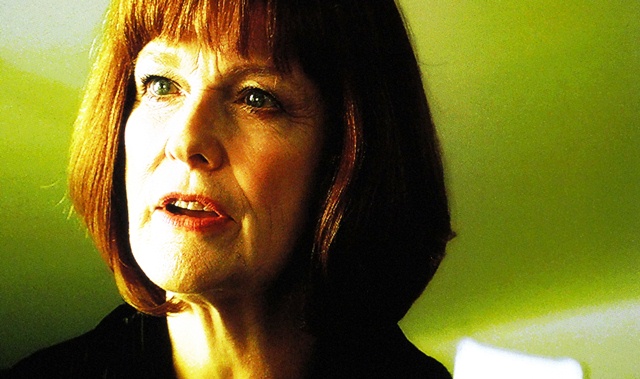
"Suffice it to say, that we've reached a point where science and technology have advanced at such an exponential rate for so long it may be way beyond our ability to regulate and control it. You should know what you're getting into Agent Dunham. I would say this to my own daughter - be careful and good luck."
-Blair Brown as Massive Dynamic's Nina Sharp, Fringe-

 Once upon a time, beginning September 9, 2008 to be precise, I watched the first three episodes of J.J. Abrams, Alex Kurtzman and Roberto Orci's Fringe [2008-2013]. I found the show generally intriguing, but its pacing, while not slow [I was clearly spoiled by Abrams and Damon Lindelof's Lost Pilot and anticipating something else], combined with a sense of familiarity likened to The X-Files [1993-2002] made it difficult for me to disconnect expectations and fully embrace.

 I'm not sure what was I was expecting. I knew the moment I heard it of the series I wanted to check it out. It sounded up my alley, but I was coming off a lengthy run of Lost [2004-2010]. By 2008, I was slogging my way through Season Four of Lost somewhat beleaguered by flash forwards and flashbacks and a seemingly endless litany of unanswered questions. With each ensuing season of Lost it was losing me [and I promise I will one day return and reassess]. Lost had wrapped up its fourth season before Fringe started. It was also at the end of that season I had grown weary of the Lost structure. The One To Be Pitied was an equally avid follower but she fell off after Season Three, which still remains one of the best for me. She simply couldn't take it anymore. Off to the Real Housewives I suppose where the mind could check out after a long day of work.


 Still, I remained faithful to Lost longer than many of my colleagues too who dropped off from viewing the series midway through it. But, alas, beset with endless mysteries, despite my enjoyment of the characters, my interest waned and I became less-than-enthusiastic or even optimistic about Lost's outcome and where it was going. Thus, I gave up. I stopped watching. To this day I don't know what became of Kate, Jack, Sayid, Locke, Hurley, Desmond, Ben and the survivors of Oceanic Flight 815. I do know I want to know and that one day I will take time out of a busy schedule to reconnect with that series. I understand that it was like a religion for many and its philosophical underpinnings and other intellectual infusions made it something of a feast for those willing to dig deeper, analyze and stay with it. Again, it may have been through sheer exhaustion that I had come to tire of the one answer, two questions rhythm. It was like singing Bruce Springsteen's One Step Up and two steps back [1987]. The inner geek in me wanted to know a lot more about the polar bear and the other oddities dropped at my feet along the way. I loved the Smoke Monster too, but even that wasn't quite what I anticipated the rest of the way following that amazing Pilot episode. Still, Lost was entirely inventive and refreshing and mostly filled my imagination with surprise and epic excitement.


 Thus, along came Fringe, another one word title, from the same creative minds as Lost. Expectations were indeed high. Abrams, Kurtzman and Orci were out to strike delicate, complex science fiction gold once again. My first impression was not one of wonder or escape or gorgeous Hawaiian beaches [okay, I needed to let go of Lost], but rather of a cold, sterile place that somehow didn't invite me in quite like I had hoped.


 Like Lost, the Fringe Pilot opened with an exciting enough airplane sequence but the science fiction mystery, the three primary characters and even Gene [as in genetics] the cow, weren't enough to convince me Fringe would be better than The X-Files. And I love bovines. Remember the one from Lost? Was I prepared to invest my valuable time into The X-Files-lite? Was that even fair? Was I wrapping the baggage of former television classics around my mind like mental chains?
 By the time I reached the third episode I still wasn't convinced to return. Trust me, I was disappointed. I didn't dislike Fringe. I just didn't have a strong feeling on it. Breaking Bad [2008-present], Sons Of Anarchy [2008-present] and Dexter [2006-present]. These shows left very strong impressions. Lost had a similar impact. When I saw the Pilot for Lost, that series had me at hello as the saying goes. Quite frankly it was a revelation and one of the most exhilarating television series I had experienced in quite some time. I wanted Fringe to be that next series, but then I let it go. I never gave it a proper chance. What if it was a grower? What if it planned to weave its way into my subconscious like The X-Files did? I might be missing out on something special here.
 Months passed into years and my scouring of the Internet always led me to the latest, inevitable science fiction updates. By God, Fringe was renewed for a second season. Wow, can you believe it? Fringe was renewed for a third season. Holy Toledo! Fringe was renewed for a fourth season. To quote the character of Palmer, played by David Clennon, from John Carpenter's The Thing [1982] "You've got to be fucking kidding?" Fringe has a Fifth season to cap off the story. Fringe was like the pink Eveready bunny and almost as weird as I would discover. It just kept going and going. As the years went by, Fringe always held my curiosity. It was like the girl that got away. Let's face it there were always a few fishes that got away. Fringe was indeed one of those fish. I still found myself drawn to it. Did I get this one wrong?
 I loved The X-Files as much as the next self-respecting science fiction fan. It was mandatory Sunday night viewing for a time. Fringe's continued renewals had to be proof enough there was something to this thing. Hell, despite using The X-Files to mature its network, Fox never renews anything. R.I.P. Firefly [sorry I wasn't there for you originally]. I was convinced I had missed the boat on this thing called Fringe. And then comments kept resurfacing across the blogosphere about Fringe that were entirely positive further underscoring the essential importance of revisiting this series one day.

 Then back on Thanksgiving 2012, I was in Florida visiting my mother. The Science Network, which already purchased syndication rights, was running a marathon of Fringe, Season One. It was late in the evening and everyone was sleeping. Fringe, coming to me again like a ghost from Christmas past. Was it a sign? I stayed with an episode just to see if it was something that still deserved another chance. It was The Equation [the episode I've reached as of this writing]. The test worked and the answer was affirmative. Lo and behold, it intrigued me and John Noble's performance was riveting enough on its own merit to prompt an exploration. I was prepared then to right a wrong.


 Immediately, with Black Friday sales in full swing, I purchased all four seasons of Fringe on Blu-Ray at a reasonably good price. I managed to catch two seasons still at 16.99 and two at 22.49. I'm a big time bargain shopper when it comes to Blu-Ray discs and I simply will wait out the price points until they bleed out.
And that my friends is where I am today revisiting the Fringe, Season One, Pilot. The Pilot, in retrospect, seeing it again, is incredibly well-produced [at $10 million], well-filmed with fantastic exterior shots in the snow primarily taking place allegedly in Massachusetts. It makes sense most of these crazy events will take place in MA, but mostly filmed in Canada.
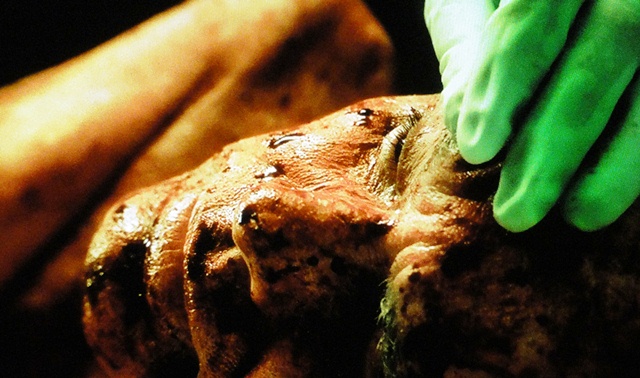
The story device centers on FBI Agent Olivia Dunham's love interest and FBI partner John Scott who is exposed to a man made compound and affliction whereby the skin becomes translucent.
Immediately, with Black Friday sales in full swing, I purchased all four seasons of Fringe on Blu-Ray at a reasonably good price. I managed to catch two seasons still at 16.99 and two at 22.49. I'm a big time bargain shopper when it comes to Blu-Ray discs and I simply will wait out the price points until they bleed out.
And that my friends is where I am today revisiting the Fringe, Season One, Pilot. The Pilot, in retrospect, seeing it again, is incredibly well-produced [at $10 million], well-filmed with fantastic exterior shots in the snow primarily taking place allegedly in Massachusetts. It makes sense most of these crazy events will take place in MA, but mostly filmed in Canada.
The story device centers on FBI Agent Olivia Dunham's love interest and FBI partner John Scott who is exposed to a man made compound and affliction whereby the skin becomes translucent.


 As I mentioned, the Pilot, perhaps with a nod to Lost, opens with the tragic events of an airliner en route from Germany to Boston whereby the passengers are all exposed to the same deadly combination of chemicals. Unlike the survivors on Lost, the Fringe group dies in a gruesome fashion.
How fitting a character, Dr. Reyes, is played by Peter Outerbridge who once played the role of one-time dogged Special Agent Barry Baldwin from Millennium [1996-1999] Season Three. As if Fringe didn't already have a problem separating and disconnecting itself from the creepy world of Chris Carter they had to tease us with that. Darin Morgan even joined the team on the consulting producer end for a period.
As I mentioned, the Pilot, perhaps with a nod to Lost, opens with the tragic events of an airliner en route from Germany to Boston whereby the passengers are all exposed to the same deadly combination of chemicals. Unlike the survivors on Lost, the Fringe group dies in a gruesome fashion.
How fitting a character, Dr. Reyes, is played by Peter Outerbridge who once played the role of one-time dogged Special Agent Barry Baldwin from Millennium [1996-1999] Season Three. As if Fringe didn't already have a problem separating and disconnecting itself from the creepy world of Chris Carter they had to tease us with that. Darin Morgan even joined the team on the consulting producer end for a period.
 And when John Scott dies, not from the Fringe incident, but an accident, his body is brought to Massive Dynamic where Executive Director with "clearance" Nina Sharp, deliciously performed by Blair Brown, asks that Scott, a man dead for five hours, be brought in for "questioning," the inquisitor inside of me yearned to know how and why? I always wanted to know what became of the Scott character. Already there are questions growing about trust and motivations regarding a number of characters particularly Homeland Security, Senior-Agent-In-Charge of the Fringe Division Phillip Broyles as well as Chief Operating Officer of Massive Dynamic Nina Sharp.
 Taking a self-contained look, and despite some character reservations, the Fringe Pilot is a reasonably exciting, well-conceived, terrifically edited piece of television with special effects that look convincing. Everyone knows my distaste for poor CGI, but Fringe's use of lighting and camera work makes it a wild introductory ride that I may have enjoyed a bit more on this second look.
Like I said, my initial reaction may have been tarnished but the distance of years from Lost and The X-Files, the usual glut of poor television outings and a hunger for something even remotely resembling a quality program like The X-Files had me appreciating Fringe that much more. The Pilot holds up as a solid piece of Sci-Fi television.
Taking a self-contained look, and despite some character reservations, the Fringe Pilot is a reasonably exciting, well-conceived, terrifically edited piece of television with special effects that look convincing. Everyone knows my distaste for poor CGI, but Fringe's use of lighting and camera work makes it a wild introductory ride that I may have enjoyed a bit more on this second look.
Like I said, my initial reaction may have been tarnished but the distance of years from Lost and The X-Files, the usual glut of poor television outings and a hunger for something even remotely resembling a quality program like The X-Files had me appreciating Fringe that much more. The Pilot holds up as a solid piece of Sci-Fi television.
 The actors, primary and secondary, certainly demonstrate a natural promise for their respective characters. It will be up to the writers to make them work. I have my reservations about Joshua Jackson as Peter Bishop, but I have faith these concerns are nothing more than my biases over his association with Dawson's Creek. Time will tell. I do think the Peter and Walter Bishop dynamic is a fascinating one based on this episode alone and look forward to that development. FBI Agent Charlie Francis is also a terrific supporting character played by Kirk Acevedo [The Thin Red Line, Oz, Band Of Brothers] along with Lance Reddick [Lost, Oz, The Wire].


 Though I would prefer authenticity in my location shooting, their is indeed a haunting, New England-like quality to the sometimes raw and snowy proceedings. Terrific camera work, a decent budget, solid special effects supported by a wonderful Michael Giacchino, Chris Tilton and Chad Seiter score only heightens the dramatic tension magnificently a la Lost. This combined with solid performances and strong writing should combine for what could be a top tier program to build upon. Still, there are a lot of ifs on the table following the conclusion of the Pilot. And of course the promise of our dear Leonard Nimoy in the role of Massive Dynamic's William Bell, a one-time lab partner of Walter Bishop, further ups-the-ante. How could the promise of Spock as a recurring character be disappointing?
 We may never get all the answers. If this is anything like Lost perhaps we'll never know what happened to Scott or certain characters, make entire sense of things that are said or hinted to or completely breakdown the Pattern. But some of the best programs are never entirely spelled out. As much as we loved The Millennium Group in Chris Carter's Millennium or just about any thread from Chris Carter's The X-Files, we never got complete closure. It's these things that bring me back to shows.


 Something tells me Fringe, while imperfect, at least in the early going, will have an equally intriguing run with some great stories to weave and an endlessly fascinating mythology to explore, and one, unlike Lost, which exploded out of the gate for me, may actually grow on me in a different way. With any luck it may craft some semblance of a beginning, middle and an end with acceptable amounts of existential questioning and characters we grow to like, maybe even love. I see great potential in Fringe based on the solid yarn the Pilot packed warts and all. While I didn't fully appreciate it initially, with the advent of the Blu-Ray it will look amazing and remain commercial free for a proper go of it. I'm no longer on the fringe on this one. I'm all in people. A second examination yields superior results in retrospect. In hindsight, I can imagine that after five years of Fringe these earlier episodes including this origin story bringing Olivia, Walter and Peter together will one day have greater emotional resonance in the things that are shown, said and introduced. Some shows get it right the first time out while others need time to find their place and be discovered like fringe science itself.

 Pilot: B/ B+.
Writer: J.J. Abrams, Alex Kurtzman, Roberto Orci. Director: Alex Graves.
Glyph Code: OBSERVER
Pilot: B/ B+.
Writer: J.J. Abrams, Alex Kurtzman, Roberto Orci. Director: Alex Graves.
Glyph Code: OBSERVER

 Additional commentary:
Of course, it's just like The Sci-Fi Fanatic to have a second look at a Sci-Fi series as it exits the airways on this very day, January 18, 2013. Five seasons and 100 episodes later and this post arrives on the very day Fringe airs its final two episodes. That wasn't really planned. I do this though. It's strictly a result of time constraints. Firefly, Battlestar Galactica and now Fringe. Better late than never I always say.
Additional commentary:
Of course, it's just like The Sci-Fi Fanatic to have a second look at a Sci-Fi series as it exits the airways on this very day, January 18, 2013. Five seasons and 100 episodes later and this post arrives on the very day Fringe airs its final two episodes. That wasn't really planned. I do this though. It's strictly a result of time constraints. Firefly, Battlestar Galactica and now Fringe. Better late than never I always say.

 There's a fine line between derivative art and art tending toward homage, but Fringe looks to be the heir apparent in quality paranormal-driven stories. It's inevitable to make comparisons between Fringe and The X-Files. As I am discovering in a look at Season One, Fringe is nearly every bit as entertaining as The X-Files, if not as meticulous as the latter in its logic at least in the early going, but with the former leaning more heavily on the corporate-sponsored paranormal than the government-conspired ufological. Both are steeped in conspiracies and cover ups compounded by trust issues with three-dimensional characters. Anyone who thinks Fringe is simply derivative of The X-Files, myself included, would be mistaken upon first glance. After all, The X-Files did its own fair share of tributes in its first season run paying tribute to John Carpenter's The Thing in Ice for starters among other tributes as it established its footing. We are victims of our own culture and our love of science fiction knows no bounds even influencing new ideas by today's creators. Escaping that reality entirely is rare. Even The Matrix [1999], as mindblowingly original as it appeared, owed a debt of gratitude to Mamoru Oshii's Ghost In The Shell [1995] which was based on Masamune Shirow's manga [1991]. It's an incestuous business. This is both the curse and gift of pop culture. And Chris Carter's influence has indeed been profound.
 Whereas The X-Files gradually unfolded its mytharc at a much more deliberate, methodical pacing and thoughtfully revealed the dynamic between Agent Fox Mulder and Agent Dana Scully as the heart of its show, Fringe is revealing itself to be a trifecta or ensemble-based dynamic between Anna Torv's Agent Olivia Dunham, Peter Bishop and scientist Walter Bishop with support by Charlie Francis and others. That component sets Fringe apart from The X-Files almost immediately. Not to mention my other half whom I affectionately refer to as The One To Be Pitied noted that "unlike The X-Files and its often shadowy meeting places between government officials, everyone, on their face, seems on board and working together rather than on their own." On the surface, cinematographically things are much more open on the surface rather than shrouded in dark lighting The X-Files so effectively employed. And while I loved Chris Carter's The X-Files and examined Season One closely, Fringe Season One is exhibiting a mythology, pacing and energy all its own.
 Abrams and company approach Fringe with an even brisker pace than The X-Files, which seems fitting for today's technologically fast-paced and globally connected reality. Like Nina Sharp says, on the scientific and technological fronts things are raging essentially out of control. Perhaps Fringe can feel purposefully messy by design, but it should be tighter.
On the character front, Australian actress Torv leads the troupe as Olivia Dunham, and like Mulder and Scully, is interested in discovering the truth, but perhaps without the pedigree of Scully and Mulder. Her Dunham character initially rejects being pulled into a massive and dark fringe universe preferring to make a difference on a more traditional investigative level. But as the mysterious Phillip Broyles essentially tells her, you can't close your eyes to the reality of societal terror bringing Fringe into a more contemporary world. Fringe is an artistic portrait of our political and global realities and is designed and emphasized beautifully through a lighting and camera palette that is trademark Abrams on a visual level.
Abrams and company approach Fringe with an even brisker pace than The X-Files, which seems fitting for today's technologically fast-paced and globally connected reality. Like Nina Sharp says, on the scientific and technological fronts things are raging essentially out of control. Perhaps Fringe can feel purposefully messy by design, but it should be tighter.
On the character front, Australian actress Torv leads the troupe as Olivia Dunham, and like Mulder and Scully, is interested in discovering the truth, but perhaps without the pedigree of Scully and Mulder. Her Dunham character initially rejects being pulled into a massive and dark fringe universe preferring to make a difference on a more traditional investigative level. But as the mysterious Phillip Broyles essentially tells her, you can't close your eyes to the reality of societal terror bringing Fringe into a more contemporary world. Fringe is an artistic portrait of our political and global realities and is designed and emphasized beautifully through a lighting and camera palette that is trademark Abrams on a visual level.
 Abrams' Lost reinvented and reinvigorated television with its energy or as John Kenneth Muir wrote at his Reflections On Cult Movies And Classic TV "helped rescue ... scripted television." He equates that fine piece of cinematic television to one of his personal favorites, the Pilot to Millennium. The Lost Pilot is indeed the very best I've seen on network television too. It still blows me away. The location shooting, the visuals, the color palette, the characters, the chaos. It's pure riveting television escape and a great way to get lost.
 Fringe certainly doesn't overextend its reach to be that epic and sweeping in scope. It's a very different proposition and much more insular in feel, but for science fiction mystery mixed with criminal procedural Fringe is big and bold TV cinema in its own right. There are some thrilling action sequences to boot. In retrospect, Fringe is a fine debut. Fringe presents an entirely different television experience from Abrams' Lost with great production values, but it certainly owes a debt of gratitude to predecessors like The X-Files and Millennium. In it very much in keeping with the spirit of those classic productions.
 The villain of Massive Dynamic is established straight away in the Pilot and the enormity of the corporate building and its massive interiors are wonderfully utilized to represent the sterile and cold reality of which Dunham is entering and engulfed by. This company is out in the open too. It's in your face declaring on billboards What do we do? What don't we do. The X-Files' conspirators and the many machinations in play, as I said, were often shrouded in darkness. The X-Files brilliantly choreographed and obscured details and did as much with its lighting to enhance plot and story as the very dialogue itself. Fringe takes an entirely different approach in this respect. It will be interesting to see where the openly villainous heads of its corporate hydra takes our heroes.

 I often enjoy referring to sci-fi writer's writer, John Kenneth Muir, as a counterpoint to my own reflections. Author Muir's reflections are always grounded in evidence and reason, never just pure emotion, and his impressions are often a pleasure to read. His immediate reaction to Fringe upon its debut was indeed strong. You have to applaud the man for hammering out an honest assessment based solely on the Pilot. If you can't be honest as a writer you have nothing. There's no shame in that. I certainly did not have as negative a reaction to Fringe upon my initial viewing, but I could understand his sensibilities on the subject. We've all experienced similar visceral responses one way or another in our viewing experiences. I had a similar adverse reaction to Stargate Universe and have since accepted the fact that I may not have had it right. I was unfairly holding Stargate Universe hostage to the Stargate SG-1 mirror. That doesn't work. That's not to suggest Muir will have a change of heart or unfairly compared Fringe to The X-Files. The same kind of detailed analysis Muir gave Fringe he's also given Stargate Universe and made me a believer.

 Muir, who loved the Abrams written and directed Lost Pilot, like myself, dubbed it "the finest I've ever seen," yet deplored the one filmed for Fringe calling it "one of the absolute worst" and an "embarrassment." He called it a "charmless, brazen rip-off" that feels "positively soulless." Ouch.
Of course, Muir points to a host of intersects between the two shows ticking off a handful of comparisons. Both Fringe and The X-Files orbit the FBI and center on "extreme possibilities, with fringe science of the week stories. Both series feature "derided" figures by society like Fox Mulder, the Lone Gunmen and now Walter Bishop.
Muir, who loved the Abrams written and directed Lost Pilot, like myself, dubbed it "the finest I've ever seen," yet deplored the one filmed for Fringe calling it "one of the absolute worst" and an "embarrassment." He called it a "charmless, brazen rip-off" that feels "positively soulless." Ouch.
Of course, Muir points to a host of intersects between the two shows ticking off a handful of comparisons. Both Fringe and The X-Files orbit the FBI and center on "extreme possibilities, with fringe science of the week stories. Both series feature "derided" figures by society like Fox Mulder, the Lone Gunmen and now Walter Bishop.
 Both series share a much larger "mytharc" or "pattern" comparing Blair Brown's character, Nina Sharp, complete with "cheesy" robotic arm to the suggestively more effective Cigarette-Smoking Man. Admittedly Blair Brown is brilliant in the role, but to pigeonhole the Pattern as Fringe's answer to government conspiracy may be entirely too premature to assume. Where these variables will take the series will take some time to reveal themselves, but I understand his comparisons on the face of the Pilot.

 Muir points to a "malicious agenda" and the tangled X-Files' web of government conspirators versus Fringe's Massive Dynamic.
Further, both series boast a male/female duo, but The X-Files Scully and Mulder are specialists. Chris Carter was indeed one of the best at writing character. This much is undeniable. Muir calls the Fringe duo about as "interesting as wonder bread. Without the crust." Hey, I like Wonder Bread, but the crust does make it more interesting. But seriously, the character dynamic is different on Fringe, and the existence of Walter Bishop makes this so, but his point is well-taken regarding Dunham and Bishop as lacking an intelligent and articulated field of specialty. This is glaring.
Muir points to a "malicious agenda" and the tangled X-Files' web of government conspirators versus Fringe's Massive Dynamic.
Further, both series boast a male/female duo, but The X-Files Scully and Mulder are specialists. Chris Carter was indeed one of the best at writing character. This much is undeniable. Muir calls the Fringe duo about as "interesting as wonder bread. Without the crust." Hey, I like Wonder Bread, but the crust does make it more interesting. But seriously, the character dynamic is different on Fringe, and the existence of Walter Bishop makes this so, but his point is well-taken regarding Dunham and Bishop as lacking an intelligent and articulated field of specialty. This is glaring.
 Muir points to the "vulnerability" and "trust" in his recent review of The X-Files Pilot when Dana Scully, without calculation, simply disrobes in front of Fox Mulder. This scene represents an immediate trusted connection in their relationship. Fringe pays homage to that scene in a similar move when Olivia Dunham disrobes for both Peter and Walter Bishop. These are different times, but the same issues of trust are in play. Comparing the two scenes one could argue the success of those scenes largely falls on the grace of those cast for each respective show and how those scenes are written and received. Nevertheless, culturally, Fringe arrives at a different time and the creators take a much harder Abrams-styled approach over Chris Carter's more ethereal presentation. Would you believe, research determined some writers felt Duchovny's performance made "wood look lively" [Entertainment Weekly]and Torv undressing was "indulgent" and an "object of scrutiny" [The Globe And Mail]. How soon we forget and how attitudes towards what is socially acceptable continue to change.

 Author Muir certainly sees Fringe as a theft in progress based on the Pilot of both The X-Files and Strange World [1999], and I'll add borrowing its energy and style from Lost for good measure. I would concur most of all with Muir's biggest problem with Fringe - the overgeneralizing of characters. He recalls Mulder and Scully as three-dimensionally "smart and passionate." The distinction of its two leads with distinct backgrounds and different perspectives certainly gave The X-Files a genuine sense of vision and razor-sharp focus to its studious proceedings. Fringe lacks that component and it feels haphazard, empty or messy as a result at times. Fringe will no doubt grow stronger over time, but the characters are not well-defined in the early going. The characters lack strength in this area.
 Muir argues Fringe gives "the veneer of intelligence, not intelligence itself." He added, "Fringe already seems anti-science, railing against "science" and "technology." In The X-Files, the villain was the misuse of science and technology, not science and technology itself. There's a distinction there. One asks us to examine human nature (how do we apply our knowledge wisely and morally?) and the other is blatantly anti-intellectual." I do believe it is arguably too soon in the series to make these assessments. Anti-science may be a strong charge but if that proves otherwise we'll note it along the way. The players behind Massive Dynamic will no doubt prove to be the trigger men or abusers of the trust for the FBI's woes across a series. And like guns that don't shoot themselves, science requires someone to apply it or in the case of Fringe as you'll discover, nefarious or otherwise, apply or misuse it. The use of science is indeed part of the ongoing theme on Fringe and the traditional components, defined or ambiguous, of good and evil are at the core like any good series.
 Muir concludes that Fringe offers "no joy, no fun, no sense of curiosity at all. It's a mechanical, heartless product...a machine grinding out sausage for the masses" and that it's "positively soulless. In fact, that's the creepiest thing about it." That criticism may be undeniably hardcore, but I can understand that perspective entirely despite having enjoyed it. There's an advantage to reflecting on any material with time, but Muir's impressions were honest and valid and Fringe has yet to prove it has the artistic depth that The X-Files respected so intelligently. Fringe indeed embodies something colder and more contemporary that seems to represent a modern climate politically and globally or as Robert Abele of LA Weekly wrote a feeling this is all "synthetically engineered."

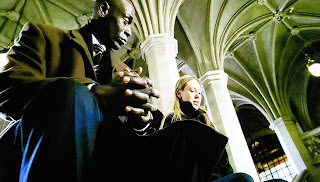
 The debut of Fringe received varied impressions across the board and wide-ranging. Author Muir was not alone in his examination. Travis Fickett of IGN felt the introductory entry served up "a lackluster pilot that promises to be a pretty good series." Misha Davenport of The Chicago-Sun Times spotted the obvious references as well calling the series an "update of The X-Files with the addition of terrorism and the office of Homeland Security." Television Without Pity had major concerns about the character issues noted earlier. The series is "entertaining" with a "largely strong" cast, but found the Dunham character "wooden and distant" even after a half season. The reviewer felt Nina Sharp was "one-note and lazily written" while the same might be said for Lance Reddick referred to as "underdeveloped." The same reviewer would have a change of heart years later. Others like The Daily Herald highly lauded Torv's performance. The Los Angeles Times noted the "masterful" John Noble as "more Shakespearean than sci-fi." Ironically, Matthew Gilbert of the Boston Globe [Boston being the center of the Fringe universe] wrote that "after the electrifying start, Fringe unfolds as an uneven, unwieldy piece of work that provides very few chills and thrills." Ultimately, many critics placed Fringe on their all-time best science fiction lists as the series progressed into later seasons. That's enough to put any self-respecting sci-fi fan on notice. I expect to have fun playing Where's Waldo? with The Observer [pictured passing Massive Dynamic].

 As John Muir penned on The X-Files in his X-Files 20th Anniversary Blogging: Series Primer, it was "a benchmark for television horror" and "achieved... wide cultural popularity" correctly dubbing the series "the Star Trek of the 1990s." All of this is undeniable and Fringe likely intended on carrying the torch to the science fiction, mystery and horror classic with its own approach in the genre multi-verse rather than copy it. If The X-Files legacy was comparable as the Star Trek of the 1990s, Lost was certainly the Star Trek of the 2000s. Fringe was in good hands fusing the best of these worlds and while it would likely never be those things, in time, it is likely to establish itself within the pantheon of science fiction favorites as it is discovered by viewers, like myself, who missed it. We'll see. Time will tell if the series can find its own emotionally resonant identity with more confidence, but the buzz on the streets is that Fringe indeed does find itself among other selves. But as television goes, the Pilot, on its own merit, while imperfect and not nearly as seductive philosophically as The X-Files, offered a solid foundation from which it could develop and grow. It indeed hopes to be a direct descendant, the next generation, of the greats based on this one. The introduction may be flawed, but for me it was certainly entertaining, as Fringe, as a series, finds closure on this frigid January day in science fiction history. Somehow that seems fitting.

 Director footnote: Alex Graves. American director who delivers a stylish, haunting, raw and snowy New England-like vibe despite the lack of location authenticity. Graves would direct the pilots for Terra Nova [2011], the under appreciated The Nine [2006-2007] along with three other episodes from the series and 666 Park Avenue. Fringe would be one of his greatest successes as far as fronting a successful series.
 Fringe Cast: Olivia Dunham [Anna Torv]/ Walter Bishop [John Noble]/ Peter Bishop [Joshua Jackson]/ Phillip Broyles [Lance Reddick]/ Charlie Francis [Kirk Acevedo]/ Nina Sharp [Blair Brown]/ Astrid Farnsworth [Jasika Nicole] a.k.a. Asterix, Astro, etc.